The Bluest Water in China: A Traveler's Jiuzhaigou Guide
How to get there, best places to see, & more


By Raphael M., a travel photographer and writer based out of New York City
Last Updated on May 28th, 2026
Jiuzhaigou Valley has been on my bucket-list for years. Located on the edge of the Tibetan Plateau, Jiuzhaigou is a remote national park that holds some of the bluest water in the world, surrounded by dramatic valleys and large waterfalls.
From Chengdu, I took a two hour train to Huanglongjiuzhai Railway Station, the closest bullet train station to the park. I came into the area pretty unprepared, as I thought I would be able to catch a DiDi (Chinese ride-share) into the park. However, they had dozens of commuter buses that would take you to the park that cost around 100rmb. It did seem as if you were supposed to purchase your ticket in advance, but since it was the off-season, I was in luck. It takes another 2.5 hours to get to the valley.
The drive from the bullet train to the valley was incredible. At first I struggled with the altitude, since the railway station was almost 10,000 feet above sea level. But once I caught my breath, the winding roads, Tibetan monasteries, and mountain landscapes were a stunning sight to see. This felt like a completely different country compared to the mega-cities I had spent my time in before this.
The town located at the base of the park is quite basic, serving almost entirely for tourists. Because of the mountainous terrain, the surrounding area is actually split into 3 towns, each mirroring one another with restaurants, hotels, and teahouses. The town closest to the park had a large portion of its stores open, while the surrounding towns became more and more desolate the further from the park they were. I booked a hotel in the second town from the park, which offered a quieter, cheaper option.
I gave myself two full days to explore Jiuzhaigou, but I only spent 1 day in the park. Being that it was the offseason, getting around the park was easier (but not easy) and less crowded, but I would recommend two during the busier months.
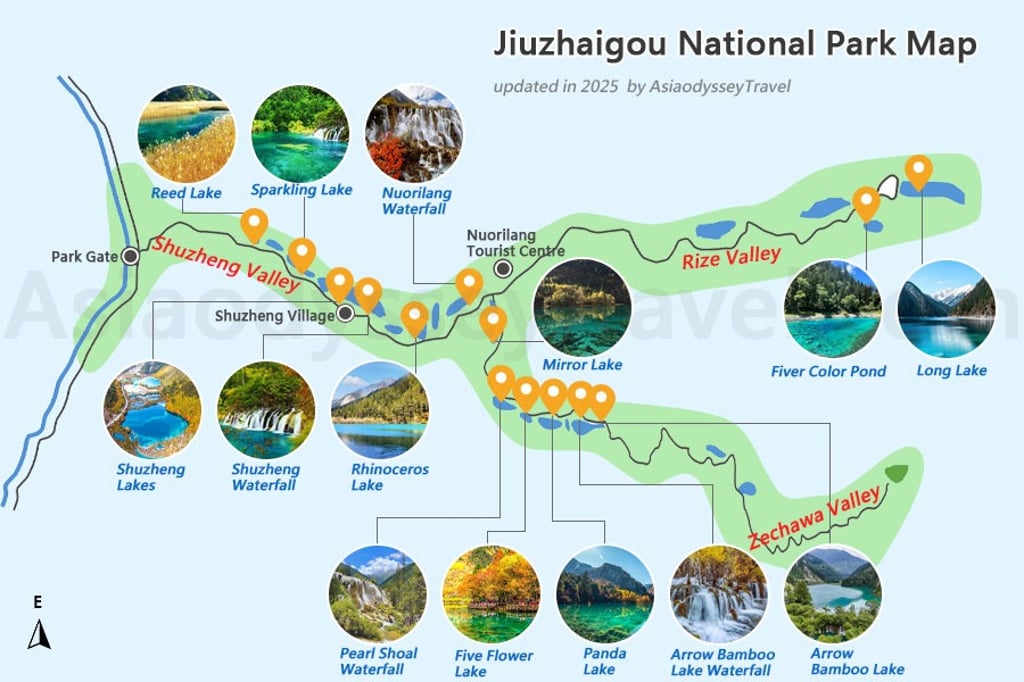
The park opens at 8:30am, which doesn’t allow you to get any sunrise opportunities within the park. The transport throughout the valley is a bus system. The structure of the park is a Y, with the entrance of the valley splitting in two. Each side offers different sites, with the buses randomly going either to the left or right. This is to avoid overcrowding, which is a huge problem here. Fortunately, the bus I got on took me to the left side, which is where I wanted to start.
The buses take you all the way down to the end of the park, where a boardwalk lines the scenic route you walk. I really dislike this structure of a nature park, as there is no opportunity to explore places for yourself, or find peace and solace away from other tourists. However, with the overcrowding conditions that do occur, it is understandable. In fact, although I was complaining that there were too many people, the photos during peak season versus what I experienced gave me a sense of relief. It also means Jiuzhaigou is a relatively accessible park for mobility limited individuals.
The left side of the part, Rize Valley, is less scenic, which is why I wanted to start my day here. It is stunning in its own respect, but doesn’t have as many waterfalls and dramatic sights compared to the right.
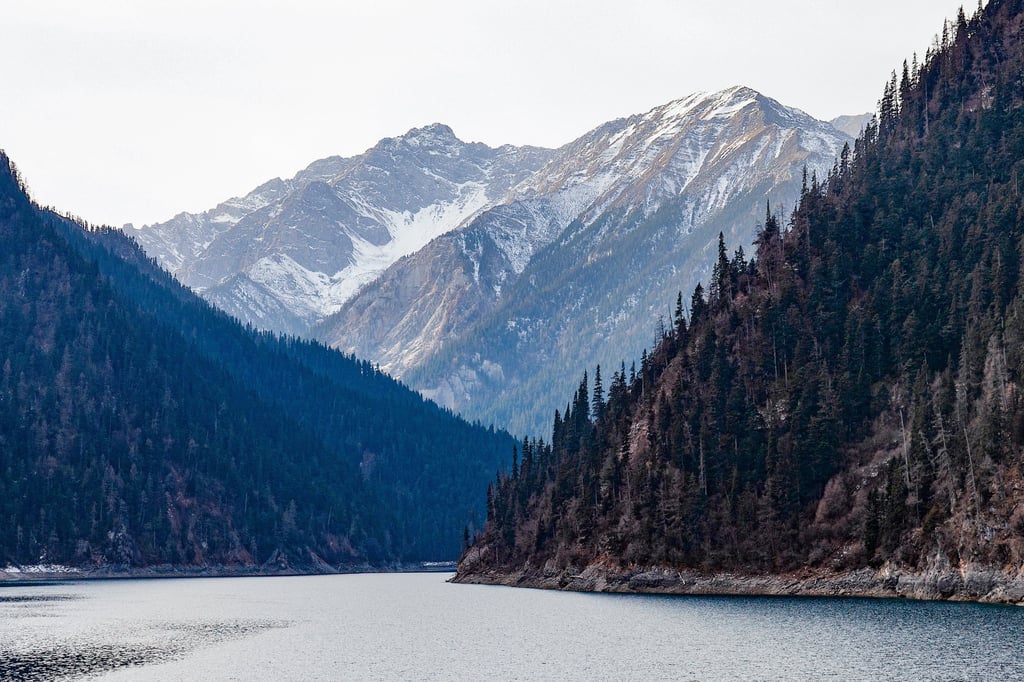
The key spots for the left side of the park are Long Lake, which is the largest lake in the entire park, and Five Color Pond, a 15 minute walk from Long Lake. The first sight of Long Lake was just stunning, as the lake had partially froze while snowcapped mountains laid in the distance.
The right side of the park, or Zechawa Valley, holds the main highlights of the park, and where you should spend more time. Because it was the offseason, they closed off the very end of this section of the park. I’m not sure if it was for renovation or maintenance, and I did contemplate hopping the fence, but ultimately decided getting arrested here wasn’t the smartest move.
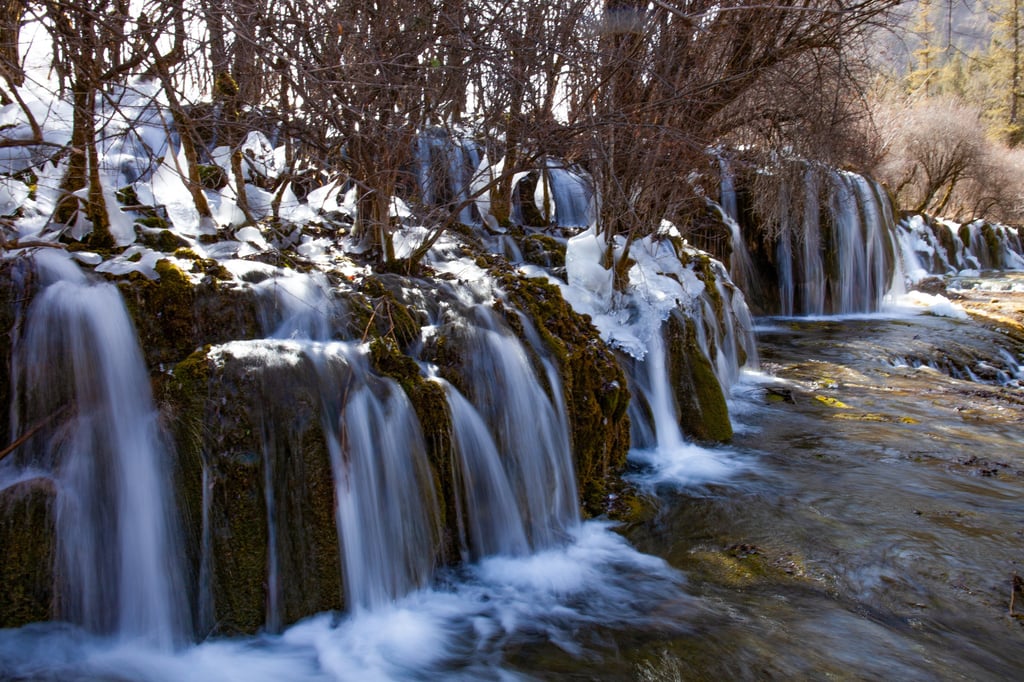
The key spots for the right side of the park are Arrow Bamboo Lake Waterfalls, Five Flower Lake, and the Pearl Shoal Waterfall. Spilling off of Arrow Bamboo Lake was this cascading treeline where water flows through its roots, a fascinating system of these short, yet dense bush-like trees that made for gorgeous slow-exposure shots, although I could only get handheld shots because I didn’t have a tripod.
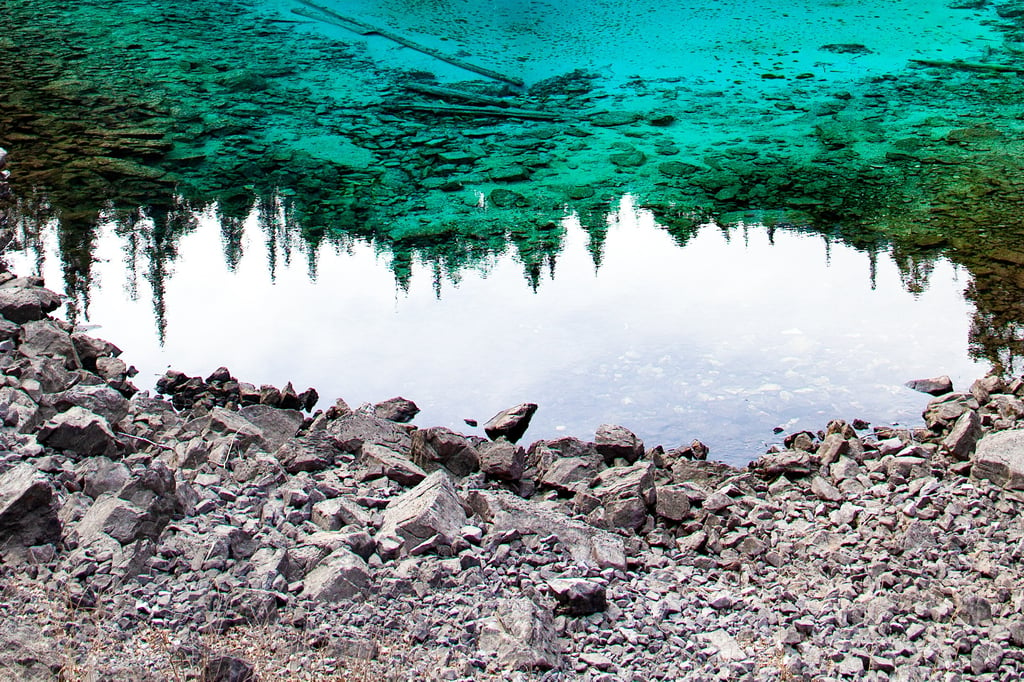
Moving down the valley, Five Flower Lake is probably the most picturesque photo in the entire park. The bus drops you off right in front of this shallow end of the lake where you could see fallen trees and deep shades of turquoise through the crystal clear water.
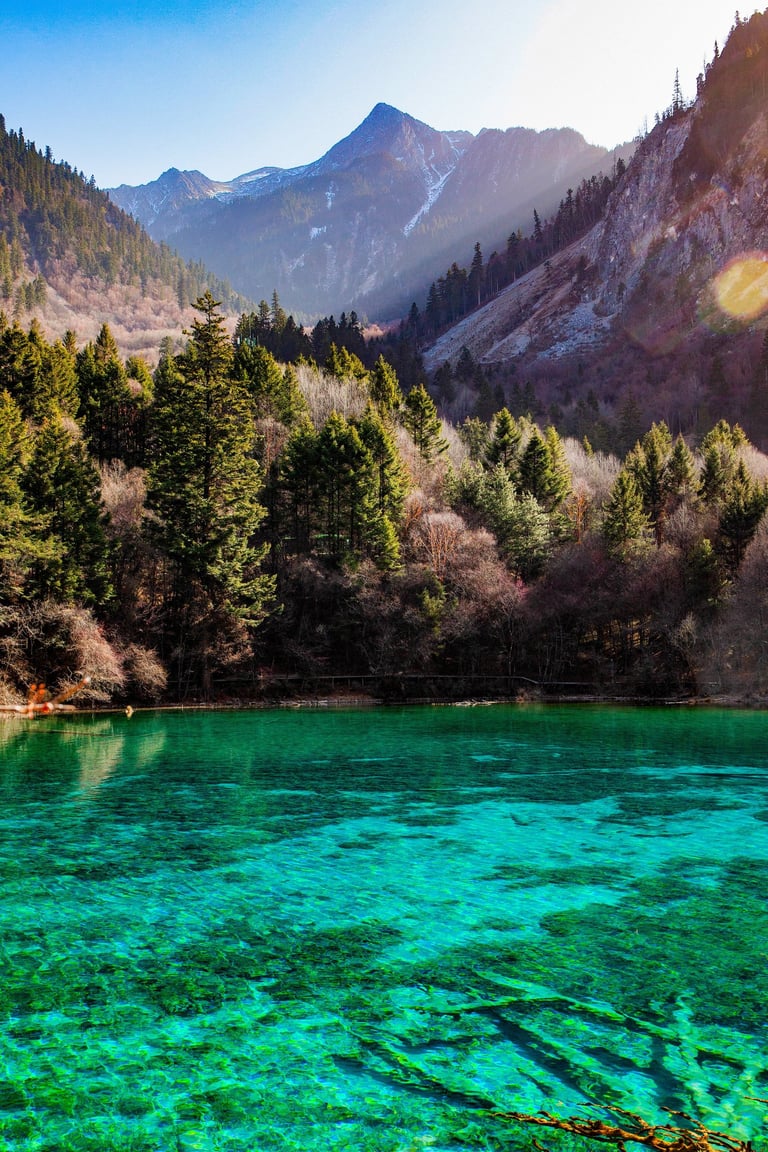
While this section was the busiest of the day, the best spot at this lake was further down, where you could see the entire lake and the mountain range behind it. This is where I caught one of my favorite photos of the entire trip, where you could see the sun beaming through the mountainscape, shimmering on the water and the evergreen trees. The backside of Five Flower Lake was also completely empty, the first moment of peace in the entire park.
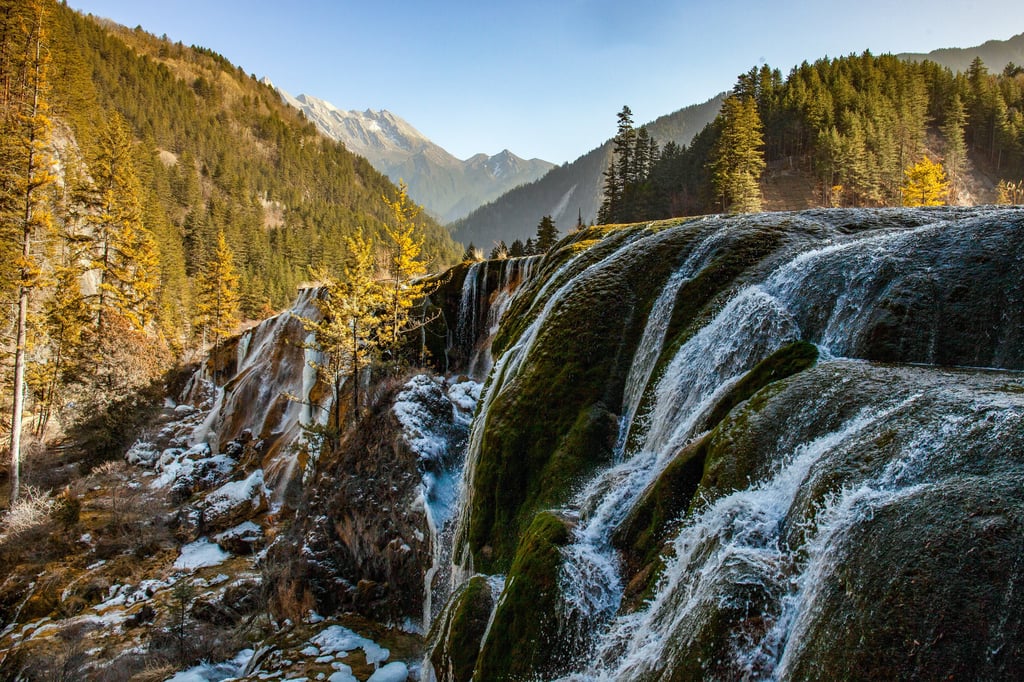
Further down the boardwalk was the Pearl Shoal Waterfall, an absolutely humongous cascade spanning a thousand feet. This was again one of the most stunning parts of the entire park, with the boardwalk running along the left side of the waterfall, and the base. The combination of fading yellows, green trees, and snowy tops made this such a memorable spot.
After I left the Pearl Shoal Waterfall, the buses leading down the park were completely jammed, as the day was ending and people were heading back. The park had closed off the walking paths down, which I was super confused about (I think it was because it was the off-season and they didn’t want people getting lost without a lot of support). After 25 minutes of waiting and seeing people get pushed into buses like sardines, I decided to ‘walk’ around the guardrails and take the walking path to the next spot.
This was the end of both sections of the Y, and I was now entering Shuzheng Valley, the valley leading back to the visitor center. The most memorable spots in this section were Rhinoceros Lake and Shuzheng Waterfall.
The walk from the waterfall to Rhinoceros Lake was the best part of the day. I finally had some peace and quiet and was able to take in the valley surrounding me. The walking path had several water crossings, where you could follow the stream that flowed through the entire park. I really recommend doing this walking section when it's open (or not), as it also led me to my favorite spot in the park.
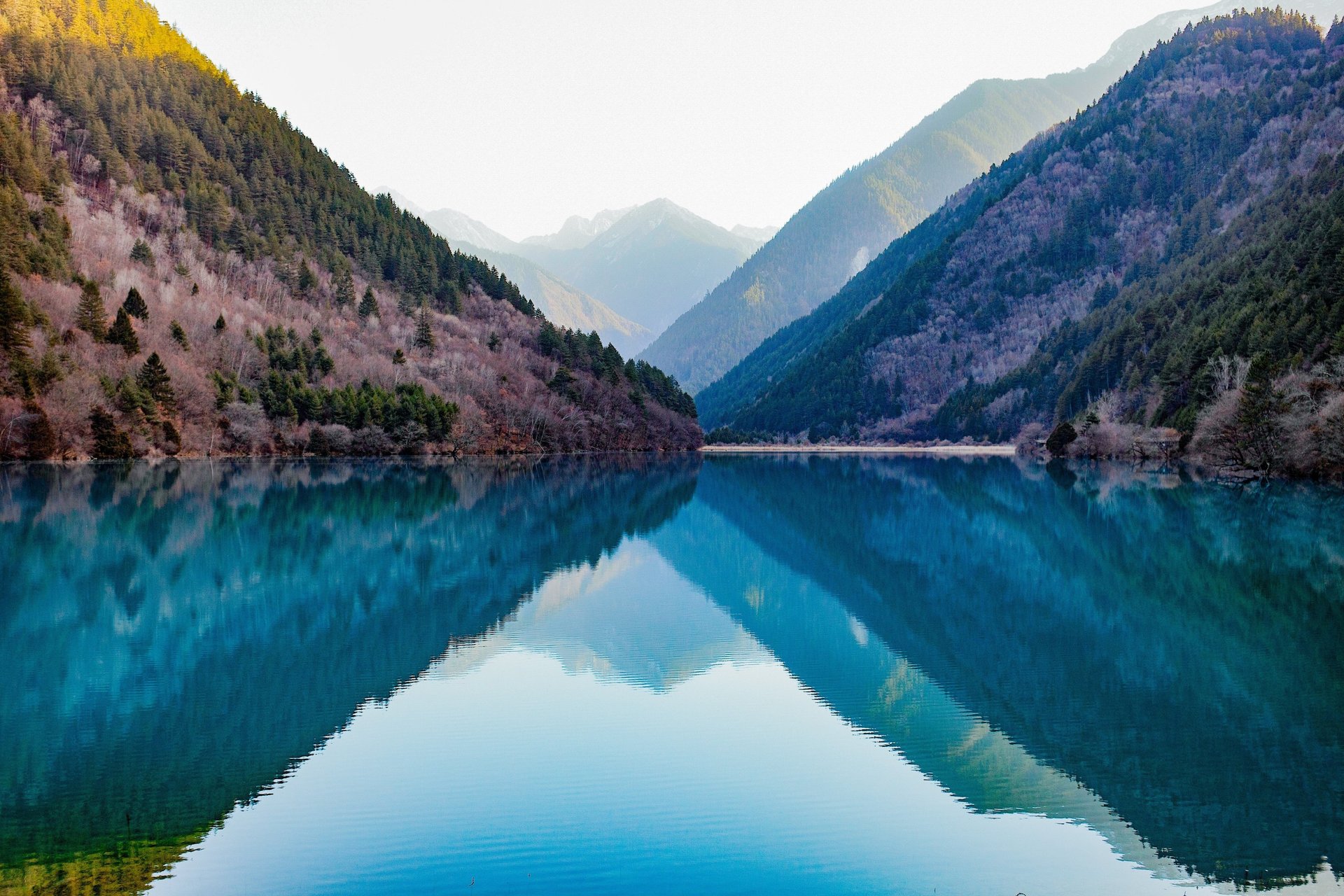
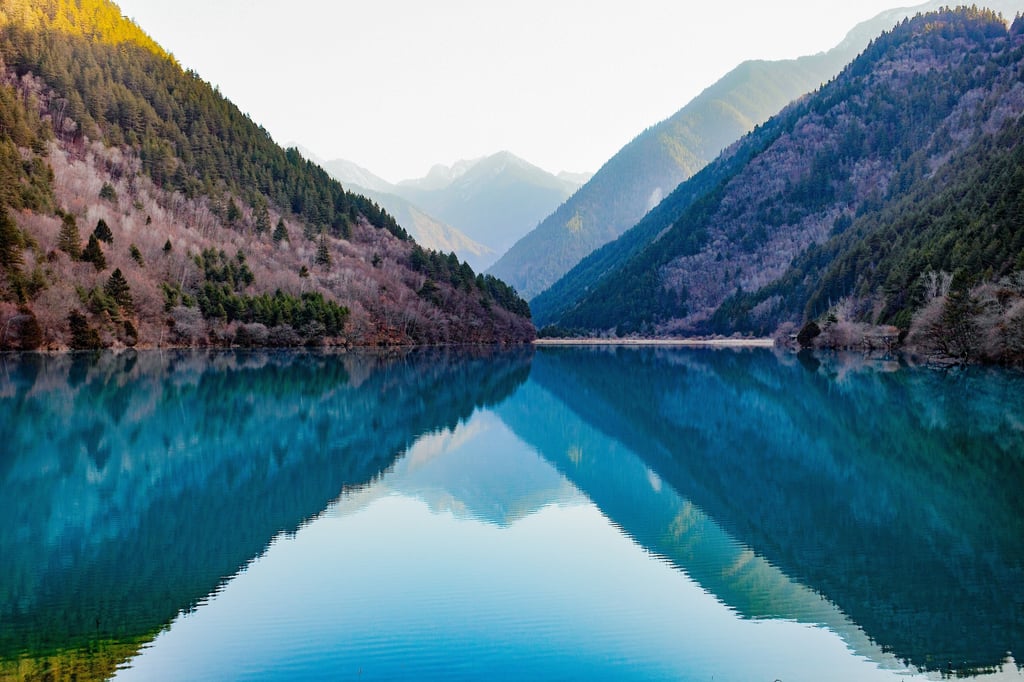
Rhinoceros Lake was the most beautiful lake in the entire park. While the lighting wasn’t the best, nor was the water perfectly still, it was one of the most tranquil experiences of the entire trip. Undisturbed by crowds, selfie sticks, or tour groups, it felt like I had the entire lake to myself with pure silence. I was able to get one of my favorite shots of the trip, where I was able to capture the symmetry and colors of the lake exactly as I saw them. I don’t think you can ever have this sort of experience at any other part of the park, and I was super grateful to cherish it. Sometimes hopping a fence is worth it.
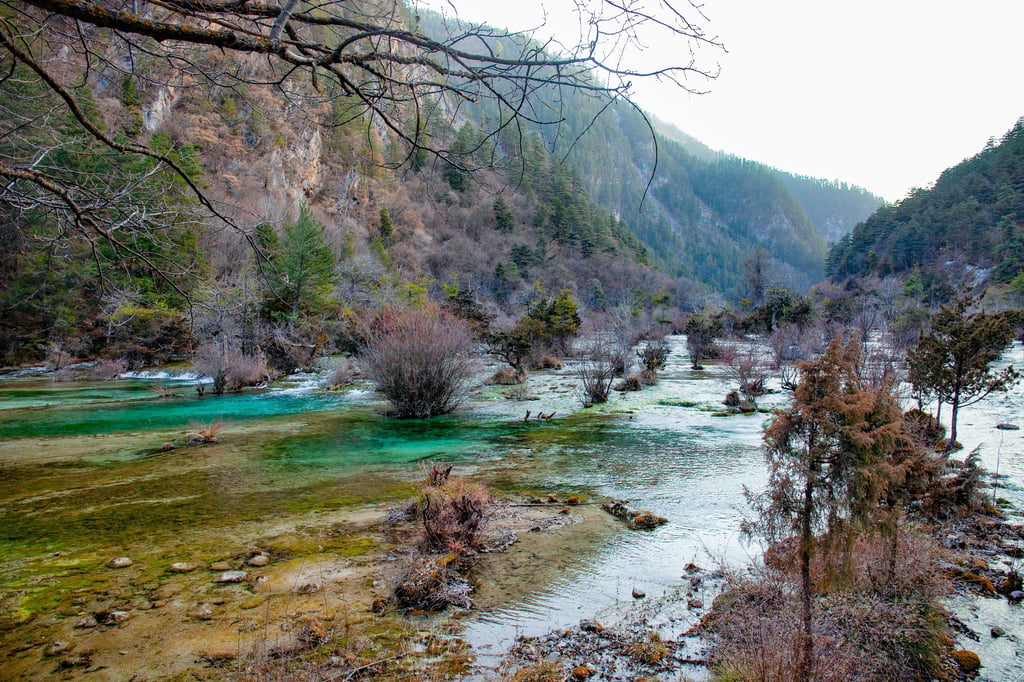
About a 20 minute walk down the valley is Shuzheng Waterfall. While the waterfall itself was beautiful, I found the streams down the falls to be even prettier, as you could see these small pockets of blue between these sparsely grown trees.
This was the end of my visit to Jiuzhaigou Valley National Park, and it definitely did not disappoint. I am super happy I came during the off-season, as peak season here would completely ruin the aesthetic and emotional feelings you get from a park like this. I would even go as far as to say it isn’t worth coming during the busy season, and that you should wait for the winter months, perhaps for snow. If you are questioning whether to make the trip from Chengdu or other parts of China, Jiuzhaigou is a must-see National Park, an internationally underappreciated gem of the world.
How to Get There:
The Local Town:
Jiuzhaigou National Park:
Rize Valley - Left Side of the Park:
Zechawa Valley - Right Side of the Park:
Shuzheng Valley - the Final Valley:
Final Thoughts: