A Place of Remebrance and Peace: A Traveler's Hiroshima Guide
How to get there, best places to see, & more

A Place of Remembrance and Peace: A Traveler's Hiroshima Guide
How to get there, best places to see, & more


By Raphael M., a travel photographer and writer based out of New York City
Last Updated on August 21st, 2026
Located on the southern edge of Japan is Hiroshima, a serene city that has some of the freshest seafood, brightest temples, and stunning views in the country. The city has become a totem of remembrance, forever a reminder of peace.

Hiroshima has one of the most incredible historical sites in the entire country, the Itsukushima Shrine, a temple gateway cemented into the ocean. The city was also the victim of the world's greatest atrocity, the first nuclear bombing site of World War II. Hiroshima will forever be attached to that event, but that doesn't embody the city, nor should it stop you from visiting.
I chose to visit Hiroshima to deepen my understanding of Japan, the implications of history, and see for myself what the city truly is like. After visiting, Hiroshima is truly a place you should make time for on your itinerary.
I stayed in the Nest Hotel Hiroshima Hatchobori, which was a pretty convenient location within the downtown area. There was a Don-Quijote within 2 blocks, metro stops for both buses and trolley-cars, and relatively spacious rooms for Japan.
I would recommend staying within the Hatchobori area, but in all honesty, Hiroshima isn't super large so there's not a lot of bad places to stay.
There are only 2 things I would recommend to do in Hiroshima: visit the Hiroshima Memorial Peace Park and Memorial Hall, and take the ferry to Miyajima Island. This makes for a good 1 day trip, or could be extended into a day and a half trip.
If you only have a few hours in Hiroshima, come here. The Memorial Peace Park is dedicated to the victims of the 1945 atomic bombing, and is 2 blocks away from the actual ground-zero location. At the center of the park, you'll find the infamous Atomic Bomb Done, formerly the Hiroshima Prefectural Industrial Promotion Hall.
At the front of the dome was a man who laid out information about the atomic bombs, alongside giving small lectures to people passing by. He was an in-vitro survivor, meaning his mother was pregnant with him when the bombing happened.
Across the river was the Information Center, formerly a municipal building. During the bombing, employee Eizo Nomura was sent down into the basement to get paperwork. This would prove to be a blessing in disguise, as the concrete surrounding the basement protected Nomura from falling victim to the bomb, surviving despite being only 170 meters from ground-zero. In the basement now, you can read about his story.
About 5 minutes from the information center is the Memorial Hall which had two sections: the main hall and a library. The library was probably the most impactful part of the day, where you could watch interviews of survivors recalling the harrowing events.

They were difficult to watch, but to see firsthand the impact of these events on the people who suffer them and be in the place in which those events occurred broadened my perspective in a way that could never be conveyed in any other manner.

Why Hiroshima?
How to get there:
Where to stay:
Hiroshima does have an international airport, so you could fly into the city. However, most people are flying in from either one of the big three cities (Tokyo, Kyoto, or Osaka). I started in Tokyo and made my way down the country, with the last city being Hiroshima. I think this is the most optimal travel route, as taking the train system down the country is more effective than going back and forth from city to city.

Hiroshima Memorial Peace Park:

Miyajima Island:
In contrast to the very heavy experience of the Peace Park is Miyajima Island, located about 40 minutes from downtown Hiroshima. The island is home to serveral Buddhist temples, namely the Itsukushima Shrine.

The Shrine, best known for its 'floating' torii gate, was constructed first in 569, but has faced multiple replacements and repairs due to it being in the literal ocean. The current gate dates back to 1875, and really does seem impossibly real.

You could also fly into Fukuoka, which is an hour from Hiroshima. Either way, Japan's rock-solid train system can get you from city to city within a few hours, so I wouldn't worry too much about where to start.
Top places to visit:
Hiroshima Memorial Hall:
In the main hall, the circular hall has the view of Hiroshima after it had been bombed, with the walls composed of 140,000 tiles, representing the lives lost. In the middle of the hall, there's a water fountain shaped like a clock at 8:15am, which is when the bomb was detonated. The water fountain represented the water the victims wanted to drink but couldn't due to limited resources and the potential increased bleeding.
It's difficult to type this in itself, but this is exactly what these Memorial sites are created to do. To educate the masses on the past, to hopefully change the future for the better. To hear those memoirs, to see the damage, to watch the endless faces and names of victims who suffered painful deaths - it is something that should never be forgotten.

The Shrine is dedicated to the three daughters of Susano-o no Mikoto: Ichikishimahime no mikoto, Tagorihime no mikoto, and Tagitsuhime no mikoto. They are the three goddesses of the storms and seas. The entire island itself is thought to be 'the island dedicated to the Gods,' the perfect place for one of the most stunning torii gates in the world.
There's also a large amount of wild deer here, similar to Nara. They can be found walking by the water, between tourists, and are pretty used to humans.

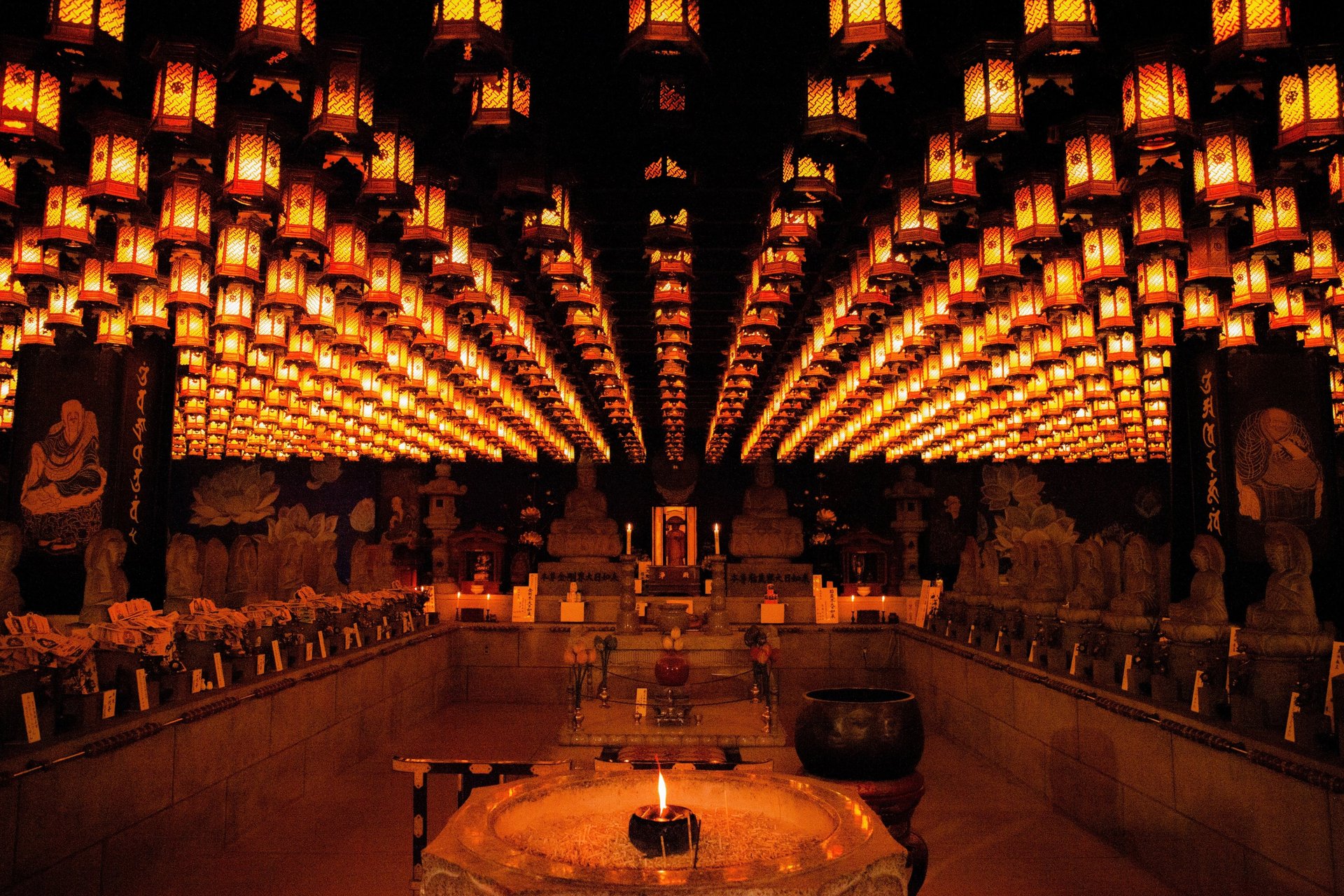
At the top of the island is Daisho-in Temple, Miyajima's oldest and most sacred temple. This temple has been a place of worship and pilgrimage for over 1200 years, featuring one of the most stunning Buddhist halls I've ever seen.


The island is just an incredible place to visit; to soak up the sun, see one of the most visually stunning sites in the country, and enjoy some seafood (there's great oysters here).

Final Thoughts: